
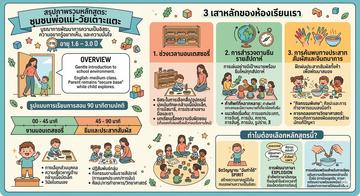
Parent -Toddler Program คือคลาสสำหรับเด็กอายุ 1.6-3.0 ขวบ ที่ยังไม่เคยไปโรงเรียน เด็กกลุ่มนี้ยังต้องการผู้ปกครองเพื่อสร้างความอุ่นใจในการทำกิจกรรมกับคนแปลกหน้า ในสถานที่ๆ ไม่คุ้นเคย คลาสนี้เป็นคลาสภาษาอังกฤษที่ผู้ปกครองมาทำกิจกรรมกับลูก ในคลาสรวม 3 กิจกรรมไว้ด้วยกัน คือ
- กิจกรรมมอนเตสซอรี่ ที่เด็กๆจะเลือกของเล่นบนชั้นมานั่งเล่นบนพรม ของเล่นมอนเตสซอรี่ ช่วยพัฒนากล้ามเนื้อมัดเล็ก สมาธิ และ การประสานตาและมือ สภาพแวดล้อมในห้องเรียนมอนเตสซอรี่ช่วยพัฒนาวินัยและความเป็นระบบระเบียบ
- กิจกรรมธีม (theme) จะเปลี่ยนไปทุกสัปดาห์ เด็กๆ จะได้คำศัพท์ใหม่ๆ ผ่านการเล่น เช่นการจับคู่ การนับเลข รูปทรง สี
- กิจกรรมพิเศษ ที่จะช่วยเสริมสร้างประสาทผัสทั้ง 5 ผ่านกิจกรรม ศิลปะ ทำอาหาร และการทดลองวิทยาศาสตร์ พัฒนา sensory
คลาสนี้จะเปิดโอกาสให้ผู้ปกครองมาทำกิจกรรมกับลูกเป็นเวลา 90 นาที โดยแบ่งเป็นสองช่วง
- 45 นาทีแรก ผู้ปกครองจะทำกิจกรรมกับลูกในห้องเรียนมอนเตสซอรี่
- 45 นาทีหลัง เป็นกิจกรรมธีมและกิจกรรมพิเศษ ซึ่งเป็นธีมรายสัปดาห์ที่เน้นทักษะ sorting matching counting
*** *** *** *** ***
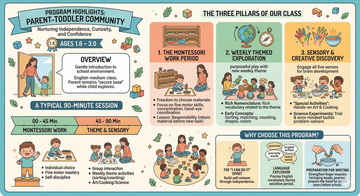
The Parent-Toddler Program is designed for children aged 1.6 to 3.0 years old who are transitioning to a school environment for the first time. At this stage, children still rely on their parents to provide a sense of security while engaging in activities with new people in an unfamiliar setting. This is an English-medium class where parents participate alongside their children, combining three core activities:
- Montessori Activities: Children freely choose materials from the shelves to work with on their mats. These activities are designed to develop fine motor skills, concentration, and hand-eye coordination. The Montessori environment also fosters self-discipline and a sense of order.
- Themed Activities: Each week features a new theme where children learn new vocabulary through play, such as matching, counting, and exploring shapes and colors.
- Special Activities: These sessions stimulate the five senses through Art, Cooking, and Science experiments, specifically designed to enhance sensory development.
This 90-minute program offers a wonderful opportunity for parents to bond and learn with their children, divided into two sessions:
- The first 45 minutes: Parents and children work together within the Montessori classroom.
- The final 45 minutes: A focus on weekly themed and special activities, emphasizing essential skills such as sorting, matching, and counting.
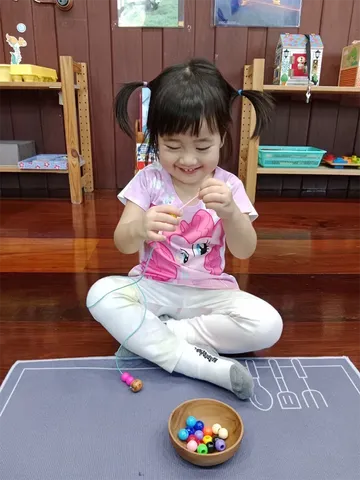
กิจกรรมมอนเตสซอรี่เป็นกิจกรรมหลักในคลาส Parent Toddler ที่เด็กๆ มีอิสระในการเลือกอุปกรณ์มาเล่นบนพรมของตนเอง ในห้องมอนเตสซอรี่ อุปกรณ์จะจัดวางไว้บนชั้นอย่างเรียบร้อยและมีหลายชิ้น เด็กๆ จึงต้องตัดสินใจในการเลือกว่าอยากเล่นอันไหนก่อน เล่นเสร็จนำไปเก็บถึงจะหยิบชิ้นใหม่มาเล่นได้ อิสระจึงมาพร้อมกับขอบเขตที่ชัดเจน
กิจกรรมมอนเตสซอรี่นี้จะช่วยเด็กๆ พัฒนากล้ามเนื้อมัดเล็กคือนิ้วของเด็กๆ เมื่อเด็กๆ ใช้นิ้วมือในการทำกิจกรรมต่างๆ เยอะๆ นิ้วมือก็จะแข็งแรงพร้อมสำหรับการเขียนในอนาคต กิจกรรมที่ช่วยพัฒนากล้ามเนื้อมัดเล็ก เช่น การตัก การคีบ การเท การบีบ เด็กๆยังจะได้ฝึกสมาธิ วินัย การรอคอย และฝึกการพึ่งพาตนเอง จากกิจกรรมมอนเตสซอรี่
เพราะงานของเด็กคือการเล่น กิจกรรมต่างๆ ในห้องมอนเตสซอรี่คืองานของเด็กๆ ที่เด็กๆ ได้ทำผ่านการเล่นอย่างมีจุดมุ่งหมายเพื่อพัฒนาทักษะต่างๆ เช่น กิจกรรมการร้อยในห้องมอนเตสซอรี่สามารถช่วยพัฒนากล้ามเนื้อมัดเล็ก การประสานตาและมือ และสมาธิของเด็กๆ ได้เป็นอย่างดี เริ่มจากรูใหญ่ๆ ที่สามารถร้อยได้ง่าย แล้วค่อยๆ เพิ่มความยากโดยการให้ร้อยสิ่งของที่มีรูเล็กลงเช่นลูกปัด หรือของที่หาได้ในครัวเช่นมักกะโรนี ก็นำมาให้เด็กๆ ร้อยได้
*** *** ***
The Montessori period is the heart of our Parent-Toddler Program, where children are given the freedom to choose materials and work on their own mats. In a Montessori environment, materials are neatly organized on shelves and offer a wide variety of choices. This encourages children to practice decision-making by selecting what they wish to explore first. Once finished, they must return the material to its place before choosing a new one—demonstrating that freedom always exists within clear boundaries.
These activities are specifically designed to develop fine motor skills—the strength in a child’s fingers. By engaging their hands frequently, children build the physical foundation necessary for writing in the future. Activities such as scooping, tonging, pouring, and squeezing are not just fun; they cultivate concentration, discipline, patience, and self-reliance.
Because a child’s work is play, every activity in the Montessori classroom is viewed as 'purposeful work' designed to build essential skills. For example, stringing activities are excellent for developing fine motor strength, hand-eye coordination, and deep focus. We begin with large objects that are easy to string and gradually increase the challenge by introducing smaller holes, such as beads or even everyday kitchen items like macaroni, which children love to use.
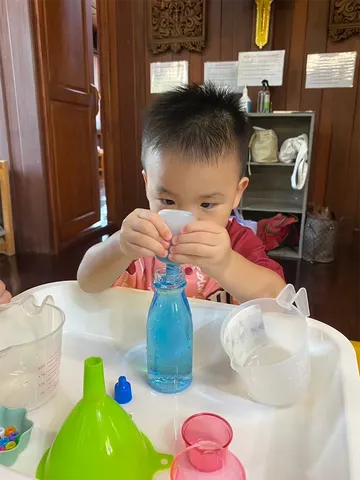
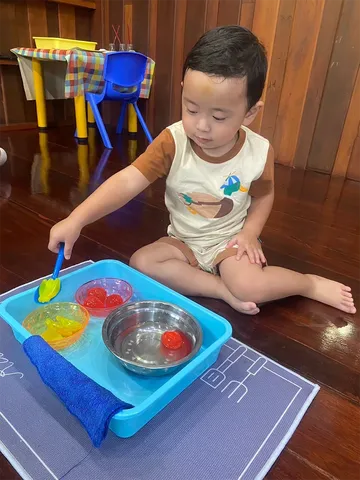
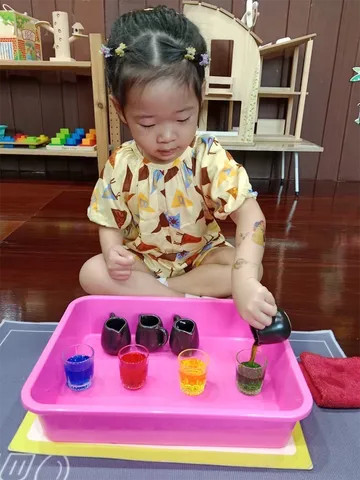
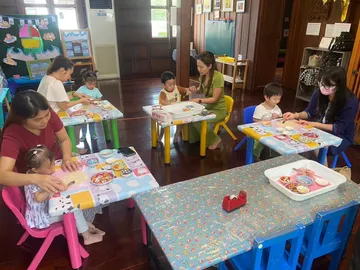
เด็กวัย 0-3 ปีเป็นวัยที่สามารถเรียนรู้และจดจำคำศัพท์ได้มากจนน่าอัศจรรย์ ดร. มาเรีย มอนเตสซอรี่ เชื่อว่าเด็กเล็กจะมีช่วงเรียนรู้ไวด้านภาษา ดังนั้นเราควรจะถือโอกาสนี้เน้นสอนคำศัพท์ใหม่ๆ ให้เด็กๆได้ฝึกฝนเพื่อเพิ่มพูนคลังคำศัพท์ให้เด็กๆ การเรียนการสอนทั้งหมดในคลาสนี้จึงเป็นภาษาอังกฤษ ทำให้เด็กๆได้เพิ่มพูนคลังคำศัพท์ผ่าน play based activities ได้เรียนรู้คำศัพท์ภาษาอังกฤษใหม่ๆจากกิจกรรมธีมที่เปลี่ยนไปทุกสัปดาห์ ซึ่งการเรียนรู้แบบธีมผ่านการเล่นทำให้เด็กๆ จดจำคำศัพท์ได้เป็นอย่างดี
กิจกรรมพิเศษในคลาสก็เปลี่ยนไปทุกสัปดาห์ หนึ่งในกิจกรรมที่เด็กๆ และผู้ปกครองชอบมากคือกิจกรรมวิทยาศาสตร์ กิจกรรมวิทยาศาสตร์เปิดโอกาสให้เด็กๆ ได้สำรวจและสังเกตการเปลี่ยนแปลงที่เกิดขึ้นระหว่างการทดลอง การได้ทำการทดลองเป็นการเปิดประสบการณ์การเรียนรู้ให้เด็กๆ ได้เป็นอย่างดี
*** *** ***
Children aged 0–3 possess an amazing capacity to learn and memorize vocabulary. Dr. Maria Montessori believed that young children go through a 'Sensitive Period' for language, and we take this opportunity to introduce new words to expand their linguistic library. All instruction in this class is conducted in English, allowing children to build their vocabulary through play-based activities. By exploring a new theme every week, children learn English naturally, as learning through play is the most effective way for them to retain information.
Our special activities also change weekly, with Science Experiments being a favorite among both children and parents. These activities allow children to explore and observe changes during experiments firsthand. This hands-on approach provides a wonderful learning experience that opens their minds to curiosity and discovery.
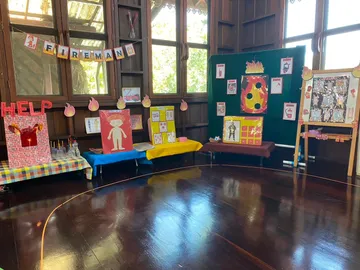
อีกหนึ่งกิจกรรมที่เด็กๆ ชอบมากเป็นกิจกรรมมอนเตสซอรี่แนว Practical Life คือการเตรียมอาหารแบบง่ายๆ ที่เด็กๆ สามารถทำเองได้ เด็กๆจะได้หั่น ได้คีบ ได้เท โดยคุณครูจะเตรียมอุปกรณ์และวัตถุดิบต่างๆ ให้ในถาด สาธิตขั้นตอนในการทำ แล้วให้เด็กๆ ลงมือทำ ทำเองทานเองหมดตั้งแต่ยังไม่กลับบ้านกันเลย ยกตัวอย่างเช่นการทำแซนด์วิชแฮมชีส เด็กๆจะได้ลองหัดทำตามขั้นตอน หั่นขนมปัง ทาเนย หั่นชีส หั่นแฮม แล้วนำมาประกบกัน เสร็จแล้วก็ทาน สีหน้าความภูมิใจเปล่งประกาย ทำเองทานเองมันอร่อยแบบนี้นี่เอง
*** *** ***
Another activity that children absolutely love is Practical Life—specifically, simple food preparation that they can do all by themselves. In this activity, children practice slicing, tonging, and pouring. The teacher prepares all the necessary tools and ingredients on a tray, demonstrates the steps, and then lets the children take over. They do everything themselves—and usually finish eating it all before it's even time to go home!For example, when making a Ham and Cheese Sandwich, children follow a sequence of steps: slicing the bread, spreading the butter, and cutting the ham and cheese before putting it all together. The look of pride on their faces is radiant; they quickly discover that everything tastes better when they’ve made it themselves!
วันเสาร์ มี 2 เวลาคือ
9:00-10:30 - 10:45-12:15
Saturday Class Schedule:
- Session 1: 9:00 AM – 10:30 AM
- Session 2: 10:45 AM – 12:15 PM
รายละเอียดค่าเรียน
4 ครั้ง 3,600 บาท - 8 ครั้ง 7,000 บาท
Tuition Details:
- 4-Session Pass: 3,600 THB
- 8-Session Pass: 7,000 THB
สามารถนัดมาทดลองได้ มีค่าทดลอง 500 บาท
Trial sessions are available by appointment for a fee of 500 THB.