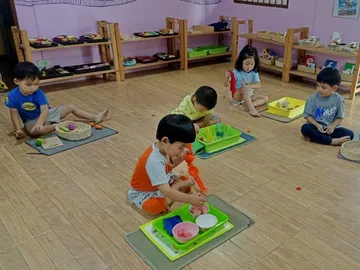
แนวคิดมอนเตสซอรี่ พัฒนาโดย ดร. มาเรีย มอนเตสซอรี่ มากว่าหนึ่งศตวรรษ เป็นแนวทางการศึกษาที่ยึดเด็กเป็นศูนย์กลาง โดยอ้างอิงจากการสังเกตพฤติกรรมทางวิทยาศาสตร์ตั้งแต่แรกเกิดจนถึงวัยผู้ใหญ่ หัวใจสำคัญของมอนเตสซอรี่ไม่ใช่การที่ครูยืนหน้าชั้นเพื่อป้อนความรู้ แต่คือการ "บ่มเพาะความกระหายใคร่รู้ตามธรรมชาติ" ให้เติบโตอย่างยั่งยืน
เสาหลักของประสบการณ์มอนเตสซอรี่
- สิ่งแวดล้อมที่เตรียมไว้ (The Prepared Environment): ห้องเรียนของเราถูกออกแบบอย่างพิถีพิถันเพื่อส่งเสริมความอิสระ อุปกรณ์ทุกอย่างวางอยู่บนชั้นที่เด็กหยิบถึง เพื่อให้เด็กเลือก "งาน" ที่เขาสนใจและเรียนรู้ที่จะรับผิดชอบการเรียนรู้ของตนเอง
- การคละอายุ (Mixed-Age Groupings): เด็กต่างวัยเรียนร่วมกันในห้องเดียว รุ่นน้องจะได้เรียนรู้จากการสังเกตรุ่นพี่ ในขณะที่รุ่นพี่ได้ทบทวนความรู้และฝึกทักษะความเป็นผู้นำผ่านการเป็นพี่เลี้ยงให้รุ่นน้อง
- การเรียนรู้ผ่านการลงมือทำ (Hands-On Learning): เราเชื่อว่า "มือคือเครื่องมือของสติปัญญา" เด็กๆ จะใช้สื่อการสอนพิเศษที่เน้นประสาทสัมผัส เพื่อทำความเข้าใจแนวคิดที่ซับซ้อน เช่น คณิตศาสตร์และภาษา ผ่านการสัมผัสและการสำรวจด้วยตัวเอง
- บทบาทของ "ครูผู้นำทาง" (The Guide): ในระบบมอนเตสซอรี่ ครูคือ "ผู้นำทาง" ที่คอยสังเกตความสนใจและ "ช่วงเวลาที่ไวต่อการรับรู้" (Sensitive Periods) ของเด็กแต่ละคน เพื่อนำเสนอบทเรียนที่เหมาะสมในเวลาที่เด็กพร้อมที่สุด
- ความเคารพและความเป็นอิสระ: เราปฏิบัติต่อเด็กในฐานะปัจเจกบุคคลที่มีศักยภาพ การปล่อยให้เด็กจัดการมื้ออาหารเอง จัดเก็บพื้นที่ทำงานเอง และแก้ปัญหาด้วยตนเอง จะช่วยสร้างความมั่นใจที่ลึกซึ้งและรักการเรียนรู้ไปตลอดชีวิต
The Montessori Method, developed by Dr. Maria Montessori over a century ago, is a child-centered educational approach based on scientific observation of children from birth to adulthood. Unlike traditional classrooms where a teacher stands at the front and dictates the lesson, Montessori focuses on nurturing a child’s natural desire to learn.
Core Pillars of the Montessori Experience
- The Prepared Environment: Our classrooms are meticulously designed to encourage independence. Materials are placed on low, open shelves, allowing children to choose their own work and take ownership of their learning.
- Mixed-Age Groupings: Children of different ages work together in the same classroom. Younger children learn by observing their older peers, while older children reinforce their knowledge and develop leadership skills by mentoring the younger ones.
- Hands-On Learning: We believe that "the hand is the instrument of the intelligence." Children use specialized, sensory-based materials to understand complex concepts—like math and language—through physical touch and exploration.
- The Role of the Guide: In Montessori, the teacher is a "Guide." They observe each child’s unique interests and developmental "sensitive periods," introducing the right lesson at exactly the right time.
- Respect and Independence: We treat children as capable individuals. By allowing them to manage their own snacks, tidy their workspace, and solve problems independently, we build deep self-confidence and a lifelong love of learning.
ในขณะที่การศึกษาแบบเดิมเน้นการท่องจำและการสอบ แต่มอนเตสซอรี่เน้น "เด็กทั้งคน" (The Whole Child) เด็กๆจะเติบโตไปไม่เพียงแค่มีความรู้ทางวิชาการ แต่ยังมีวุฒิภาวะทางอารมณ์ มีระเบียบวินัยในตนเอง และมีความสามารถในการคิดวิเคราะห์เพื่อปรับตัวเข้ากับโลกที่เปลี่ยนแปลงไปWhy It Works
While traditional education often focuses on memorization and testing, Montessori focuses on the whole child. Students graduate not just with academic knowledge, but with high levels of emotional intelligence, self-discipline, and the ability to think critically in a changing world.
"เด็กเกิดมาพร้อมความสามารถในการทำสิ่งใดก็ได้ หากเด็กทำไม่ได้ สาเหตุมีเพียงเพราะ สภาพแวดล้อมทางกายภาพที่ไม่เอื้ออำนวย หรือเพราะไม่รู้วิธีทำเท่านั้น" -- ดร. มาเรีย มอนเตสซอรี่ --
"The goal of early childhood education should be to activate the child’s own natural desire to learn."
— Dr. Maria Montessori
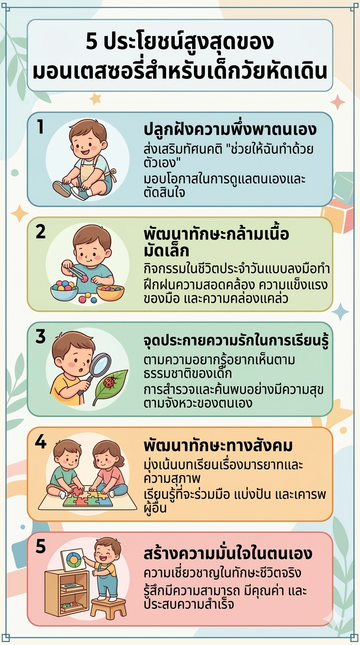
ประโยชน์สูงสุด 5 ข้อของ Montessori สำหรับเด็กวัยเตาะแตะ
มอนเตสซอรี่สำหรับเด็กวัยเตาะแตะมีความโดดเด่นไม่เหมือนใคร! เพราะมันก้าวไปไกลกว่าการดูแลเด็กแบบทั่วไป เพื่อบ่มเพาะความเป็นอิสระและปลูกฝังความรักในการเรียนรู้ตลอดชีวิตให้แก่เด็กตั้งแต่วันแรก
1. ส่งเสริมความเป็นอิสระ (Fosters Independence)
"ช่วยฉันให้ทำได้ด้วยตัวเอง" ห้องเรียนมอนเตสซอรี่ถูกออกแบบมาเพื่อเสริมสร้างศักยภาพให้เด็กวัยเตาะแตะสามารถทำสิ่งต่างๆ ได้ด้วยตนเอง ตั้งแต่การใส่รองเท้าไปจนถึงการเตรียมอาหารว่าง ทุกกิจกรรมล้วนสร้างความเชื่อมั่นและการพึ่งพาตนเอง
2. พัฒนากล้ามเนื้อมัดใหญ่และมัดเล็ก (Develops Gross and Fine Motor Skills)
ผ่านกิจกรรมที่ลงมือทำจริงอย่างมีจุดมุ่งหมาย เช่น การรินน้ำ การติดกระดุม และการใช้สื่อการสอนเฉพาะทาง เด็กๆ จะได้ฝึกการทำงานประสานกันระหว่างมือและตา รวมถึงสร้างความแข็งแรงให้กล้ามเนื้อมัดเล็ก นอกจากนี้ยังมีการบูรณาการกิจกรรมทางกายเพื่อส่งเสริมการทรงตัวและการประสานงานของร่างกายโดยรวม
3. บ่มเพาะสมาธิและการจดจ่อ (Cultivates Concentration and Focus)
ด้วยการเปิดโอกาสให้เด็กได้ทำงานอย่างต่อเนื่องโดยไม่ถูกขัดจังหวะ มอนเตสซอรี่จึงช่วยปกป้องพัฒนาการด้านสมาธิของเด็ก เด็กๆ มีอิสระในการเลือกกิจกรรมที่ตนเองสนใจและทำซ้ำได้นานเท่าที่ต้องการ ซึ่งช่วยส่งเสริมการจดจ่อที่ลึกซึ้งและสร้างช่วงความสนใจ (Attention Span) ที่ยาวนานขึ้น
4. ปลูกฝังมารยาททางสังคมและความอ่อนน้อม (Encourages Social Grace and Courtesy)
เด็กวัยเตาะแตะจะได้เรียนรู้วิธีการอยู่ร่วมกันในสังคมผ่านการแนะนำอย่างอ่อนโยน บทเรียนเรื่อง "มารยาทและการให้เกียรติ" (Grace and Courtesy) จะสอนทักษะต่างๆ เช่น การแบ่งปัน การรอคอยเพื่อใช้สื่อการสอนต่อจากผู้อื่น และการปฏิสัมพันธ์อย่างสุภาพ ซึ่งเป็นการวางรากฐานด้านความเห็นอกเห็นใจและฉลาดทางสังคม
5. ปลูกฝังความรักในการเรียนรู้ (Instills a Love of Learning)
ด้วยการมุ่งเน้นไปที่ความสนใจของเด็กแต่ละคนและความอยากรู้อยากเห็นตามธรรมชาติ มอนเตสซอรี่ทำให้การเรียนรู้กลายเป็นเส้นทางที่สนุกสนานและขับเคลื่อนด้วยตนเอง เด็กๆ ไม่ได้เพียงแค่ท่องจำ แต่พวกเขากำลังค้นพบด้วยตนเอง ซึ่งช่วยสร้างความหลงใหลในการสำรวจและการค้นหาคำตอบอย่างแท้จริง
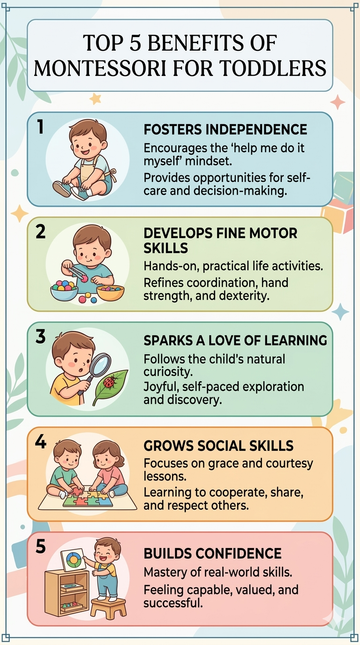
Top 5 Benefits of Montessori for Toddlers
Montessori for toddlers is truly unique! It goes beyond typical childcare to nurture independence and a lifelong love of learning right from the start.
1. Fosters Independence
"Help me do it by myself." Montessori classrooms are designed to empower toddlers to complete tasks independently. From putting on their own shoes to preparing a snack, every activity builds self-reliance and confidence.
2. Develops Gross and Fine Motor Skills
Through purposeful, hands-on activities like pouring water, buttoning, and using specialized materials, toddlers refine their hand-eye coordination and strengthen small muscles. Physical activities are also integrated to support overall coordination and balance.
3. Cultivates Concentration and Focus
By offering uninterrupted work cycles, Montessori protects the child's developing concentration. Toddlers are free to choose activities that interest them and repeat them for as long as they like, fostering deep engagement and a longer attention span.
4. Encourages Social Grace and Courtesy
Toddlers learn how to navigate a social community with gentle guidance. "Grace and Courtesy" lessons teach skills like sharing, waiting for a turn with materials, and polite interaction, laying the foundation for empathy and social intelligence.
5. Instills a Love of Learning
By focusing on individual interests and natural curiosity, Montessori makes learning an enjoyable, self-driven journey. Toddlers aren't just memorizing; they are actively discovering, which builds a genuine passion for exploration and discovery.
สถาปัตยกรรมแห่งการเติบโต: พัฒนาการสี่ระนาบของดร.มอนเตสซอรี
การศึกษามอนเตสซอรีมิได้ถูกกำหนดขึ้นอย่างสุ่มหรือไร้แบบแผน หากแต่เป็นระบบการศึกษาที่ซับซ้อนซึ่งตั้งอยู่บนความเข้าใจอย่างลึกซึ้งเกี่ยวกับพัฒนาการของมนุษย์ ดร.มาเรีย มอนเตสซอรี ได้ระบุช่วงพัฒนาการที่แตกต่างกันออกเป็นวงจรละหกปี หรือที่เรียกว่า “ระนาบของพัฒนาการ (planes of development)” ซึ่งเป็นเส้นทางที่เด็กทุกคนจะก้าวผ่านไป แต่ละระนาบเปรียบเสมือนการปรับโครงสร้างใหม่ทั้งหมดของจิตใจ บุคลิกภาพ และความสัมพันธ์ของเด็กกับโลก เปรียบได้กับกระบวนการแปรสภาพของหนอนผีเสื้อที่กลายเป็นผีเสื้อ เพื่อให้สามารถชี้นำเด็กได้อย่างมีประสิทธิภาพ การศึกษามอนเตสซอรีจึงออกแบบวิธีการเรียนรู้และสภาพแวดล้อมให้สอดคล้องกับความไวต่อการเรียนรู้และ “พลังพิเศษ” ที่เป็นเอกลักษณ์ของเด็กในแต่ละระนาบของพัฒนาการนั้นๆ
The Architecture of Growth: Dr. Montessori's Four Planes of Development
Montessori education isn't arbitrary; it's a sophisticated system built upon a precise understanding of human development. Dr. Maria Montessori identified distinct six-year cycles, or "planes," through which every child progresses. Each plane represents a complete restructuring of the child's mind, personality, and relationship with the world, comparable to metamorphosis in a caterpillar becoming a butterfly. To effectively guide children, Montessori education aligns its methods and environments with the unique sensitivities and "superpowers" inherent to each specific plane.
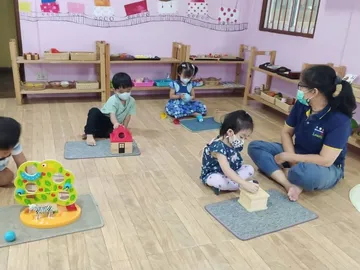
ปีแห่งการก่อร่างสร้างตัว มอนเตสซอรี่สำหรับเด็กวัย 1-4 ปี
ในสภาพแวดล้อมแบบมอนเตสซอรี่สำหรับเด็กอายุ 1–4 ปี จุดมุ่งหมายจะเปลี่ยนจากการ "ดูแลเด็ก" ไปสู่ "การศึกษาเพื่อสร้างความเป็นอิสระ" ช่วงวัยนี้ถูกออกแบบมาเพื่อสนับสนุนสัญชาตญาณตามธรรมชาติของเด็กที่อยากจะบอกว่า "ช่วยสอนให้ฉันทำได้ด้วยตัวเอง"
ประโยชน์หลักสำหรับกลุ่มอายุ 1-4 ปี
1. การพัฒนากล้ามเนื้อมัดใหญ่และมัดเล็ก
ในวัยนี้เด็กๆ กำลังพัฒนาการเคลื่อนไหวให้สมบูรณ์ ห้องเรียนมอนเตสซอรี่มีกิจกรรม "การดำเนินชีวิตประจำวัน" (Practical Life) เช่น การรินน้ำ การปอกกล้วย หรือการติดกระดุมเสื้อ ซึ่งช่วยฝึกการทำงานประสานกันระหว่างมือและตา และสร้างความแข็งแรงให้กล้ามเนื้อมัดเล็กในมือ เพื่อเตรียมความพร้อมสำหรับการเขียนในอนาคต
2. ช่วงเวลาที่ภาษาเบ่งบาน (Language Explosion)
ในช่วงอายุ 1 ถึง 4 ปี เด็กๆ จะมีคำศัพท์เพิ่มขึ้นอย่างก้าวกระโดด วิธีการแบบมอนเตสซอรี่จะรายล้อมเด็กด้วยการใช้คำเรียกที่แม่นยำ แทนที่จะเรียกแค่ว่า "นก" คุณครู (Guide) อาจระบุชื่อเฉพาะ เช่น "นกกางเขน" หรือ "นกกระจอก" เพื่อตอบสนองความสนใจอย่างแรงกล้าของเด็กในการขานชื่อสิ่งต่างๆ บนโลกของเขา
3. ความเป็นระเบียบและกิจวัตรประจำวัน
เด็กวัยเตาะแตะต้องการสิ่งที่คาดเดาได้ สภาพแวดล้อมมอนเตสซอรี่จึงถูกจัดวางอย่าง "เป็นระเบียบ" ทุกอย่างมีที่ทางที่แน่นอน โครงสร้างนี้ช่วยให้เด็กๆ รู้สึกปลอดภัย ลดอาการ "อาละวาด" (Tantrums) ที่เกิดจากความสับสน และช่วยให้เด็กพัฒนาลำดับความคิดที่เป็นเหตุเป็นผล (เช่น ใส่รองเท้าก่อน แล้วจึงค่อยออกไปข้างนอก)
4. มารยาททางสังคมและความอ่อนน้อม (Social Grace and Courtesy)
นี่คือช่วงอายุที่บทเรียนเรื่อง "มารยาทและการให้เกียรติ" เริ่มต้นขึ้น เด็กๆ จะได้เรียนรู้วิธีการใช้ชีวิตร่วมกับผู้อื่นในสังคม เช่น การสั่งน้ำมูกอย่างสุภาพ การแบ่งปันขนมให้เพื่อน และการรู้จักรอคอยเพื่อจะใช้สื่อการสอนต่อจากผู้อื่น สิ่งนี้เป็นการสร้างรากฐานของความเห็นอกเห็นใจและฉลาดทางสังคม
5. สมาธิและการจดจ่อ
ด้วยการอนุญาตให้เด็กเลือกกิจกรรมเองและทำงานนั้นนานเท่าที่ต้องการโดยไม่ถูกขัดจังหวะ มอนเตสซอรี่จึงช่วยปกป้อง "วงจรแห่งสมาธิ" (Cycle of Concentration) ที่กำลังพัฒนาของเด็ก สิ่งนี้ช่วยสร้างช่วงความสนใจ (Attention Span) ที่ยาวนานขึ้น ซึ่งจะเป็นประโยชน์ต่อเด็กไปตลอดเส้นทางการเรียนรู้
The Formative Years: Montessori for Ages 1-4
In a Montessori environment for children aged 1–4, the focus shifts from "childcare" to "education for independence." This stage is designed to support the child’s natural urge to say, "Help me to do it by myself."
Key Benefits for the 1-4 Age Group
1. Development of Gross and Fine Motor Skills
At this age, children are perfecting their movement. Montessori classrooms offer "Practical Life" activities—such as pouring water, peeling a banana, or buttoning a coat—that refine hand-eye coordination and strengthen the small muscles in the hands, preparing them for writing later on.
2. Language Explosion
Between 1 and 4, children experience a massive leap in vocabulary. The Montessori method surrounds them with precise nomenclature. Instead of just saying "bird," a Guide might identify a "Robin" or a "Sparrow," honoring the child’s intense interest in naming their world.
3. Order and Routine
Toddlers crave predictability. The Montessori environment is "ordered"—everything has a specific place. This structure helps children feel secure, reduces "tantrums" caused by chaos, and helps them develop a sense of logical sequence (first we put on our shoes, then we go outside).
4. Social Grace and Courtesy
This is the age where "Grace and Courtesy" lessons begin. Children learn how to navigate a social community—how to blow their nose politely, how to offer a snack to a friend, and how to wait for their turn with a specific material. It builds the foundation for empathy and social intelligence.
5. Concentration and Focus
By allowing a child to choose an activity and work with it for as long as they like without interruption, Montessori protects the child's developing "cycle of concentration." This builds a longer attention span that will benefit them throughout their entire academic career.
He does it with his hands, by experience, first in play and then through work. The hands are the instruments of man’s intelligence.” -- Dr. Maria Montessori --
“เปิดโอกาสให้เด็กๆ ได้เล่น เพราะงานของเด็กคือการเล่น”
กิจกรรมมอนเตสซอรี่จะช่วยปูพื้นฐานที่สำคัญต่างๆ ให้กับเด็กๆวัยเตาะแตะนี้ได้เป็นอย่างดี พื้นฐานที่สำคัญสำหรับเด็กเล็กที่จะได้จากห้องเรียนมอนเตสซอรี่คือ
เพราะงานของเด็กคือการเล่น กิจกรรมต่างๆ ในห้องมอนเตสซอรี่คืองานของเด็กๆที่เด็กๆได้ทำผ่านการเล่นอย่างมีจุดมุ่งหมายเพื่อพัฒนาทักษะต่างๆ ในห้องมอนเตสซอรี่เด็กๆ จะมีอิสระในการเลือกของเล่น เด็กต้องเลือกว่าอยากเล่นอะไร เด็กจะต้องไปนำพรมหรือเสื่อมาปูเพื่อเป็นพื้นที่ทำงานของตน จากนั้นจึงเดินไปหยิบของมาเล่นที่พรมของตน เล่นเสร็จก็นำไปเก็บที่ชั้น ก่อนจะไปนำของชิ้นใหม่มาเล่น ซึ่งเป็นการฝึกความมีระเบียบวินัย นอกจากนั้นเด็กๆจะรู้ว่าจะต้องไม่ไปหยิบของบนพรมเพื่อน ถ้าอยากเล่นต้องรอให้เพื่อนนำไปเก็บที่ชั้นก่อน ซึ่งเป็นการฝึกการอดทนรอคอย
Because a child’s work is play, activities in the Montessori environment are viewed as 'purposeful work' disguised as play, designed to develop various developmental skills. In a Montessori classroom, children have the freedom to choose their own activities. A child decides what they want to work with, prepares their workspace by laying out a work mat or rug, and then fetches their chosen material. Once finished, they return the item to its proper place on the shelf before choosing a new activity; this process instills a natural sense of order and self-discipline.
Furthermore, children learn social boundaries, such as respecting a peer's workspace and not taking materials from another child's mat. If they wish to use a specific item, they must practice patience and wait until their peer has returned it to the shelf.
ในห้องมอนเตสซอรี่เด็กๆ จะเกิดสมาธิเนื่องจาก เด็กๆ จะได้รับอนุญาตให้เล่นของเล่นนานเท่าไหร่ก็ได้โดยไม่มีใครมาห้าม เล่นซ้ำได้ และเด็กๆ สามารถฝึกฝนการเล่นจนเกิดความชำนาญ ของเล่นมอนเตสซอรี่ทุกชิ้นจะมีวัตถุประสงค์ในการช่วยส่งเสริมพัฒนาการด้านต่างๆ เช่น ร้อย คีบ หนีบ ตัก เท จะช่วยพัฒนากล้ามเนื้อมัดเล็ก และพัฒนาการประสานตาและมือของเด็กๆเพื่อให้พร้อมในการเขียนต่อไป
ในห้องเรียนมอนเตสซอรี่ภาพที่เราเห็นเป็นประจำคือ ภาพเด็กๆ นั่งเล่นของเล่นมอนเตสซอรี่บนพรมของตนเอง แววตาของความมุ่งมั่น การลองผิดลองถูกจนทำสำเร็จ และแววตาตื่นเต้นดีใจที่ทำสำเร็จ ห้องเรียนมอนเตสซอรี่ได้เสริมสร้างความมั่นใจ ความภูมิใจในตนเองให้กับเด็กๆ วันละเล็กวันละน้อย เด็กๆ จะพูดกับตนเองว่า "หนูทำได้" "เพียงเราเชื่อมั่นในความสามารถของเด็กๆ และปล่อยให้เด็กๆ ได้ทำสิ่งต่างๆ ด้วยตนเอง พยายามช่วยเหลือเท่าที่จำเป็นเท่านั้น" หลักการของมอนเตสซอรี่สามารถเริ่มทำได้ที่บ้าน
In a Montessori classroom, children develop deep concentration because they are allowed to work with their chosen materials for as long as they wish without interruption. They can repeat activities as many times as they need, practicing until they achieve mastery. Every Montessori material is designed with a specific purpose to support various developmental milestones—such as threading, tonging, clipping, scooping, and pouring. These tasks refine fine motor skills and hand-eye coordination, laying the essential foundation for future writing.
A common sight in our classroom is children sitting peacefully on their work mats, eyes filled with determination as they navigate trial and error until they succeed. When they finally master a task, their eyes light up with excitement and joy. Day by day, the Montessori environment builds self-confidence and self-esteem. Children begin to say to themselves, 'I can do it.' When we believe in a child's capabilities and allow them to do things for themselves—offering help only when absolutely necessary—we empower them. This Montessori principle is a journey that can begin right at home.