
รู้จักอาหารไทยโบราณหาทานยาก แต่มีที่ Inn Train
Discover Rare, Traditional Thai Dishes, Available at Inn Train
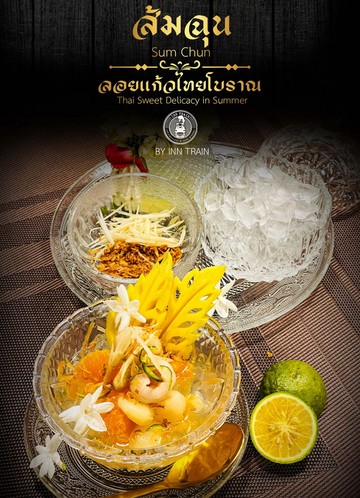
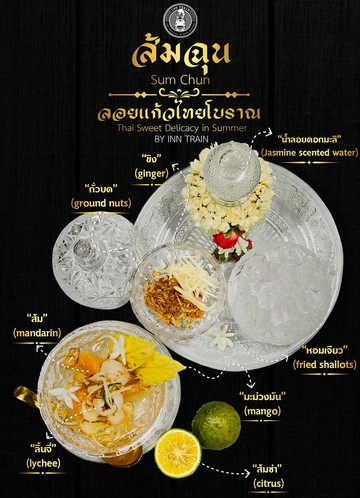
ส้มฉุน ลอยแก้วไทยโบราณ
ส้มฉุน คือผลไม้ลอยแก้วของไทยที่มีมาตั้งแต่สมัยรัชกาลที่ ๒ คำว่า ส้มฉุน ที่จริงแล้วหมายถึง ลิ้นจี่ ซึ่งในสมัยก่อนลิ้นจี่ที่นำเข้ามาจากประเทศจีนนั้น มักจะมาในรูปของผลไม้ดองหรือผลไม้แปรรูป ซึ่งการแปรรูปเหล่านี้ทำให้ลิ้นจี่มีกลิ่นที่ค่อนข้างฉุน คล้ายกับกลิ่นสาบเหล้า หรือกลิ่นหมักที่แรงๆ
ด้วยเหตุนี้เอง คนโบราณจึงเรียกชื่อลิ้นจี่ที่นำเข้ามาแบบนั้นว่า "ส้มฉุน" โดยคำว่า "ฉุน" ในภาษาไทยนั้น หมายถึงกลิ่นที่ฉุนจัดกลิ่นแรงๆ และเพื่อเป็นการช่วยดับกลิ่นฉุนนี้เอง คนโบราณจึงนิยมนำ ส้มซ่า ซึ่งมีกลิ่นหอมและรสเปรี้ยวอมหวานที่เป็นเอกลักษณ์ มาใส่รวมกันในเมนู "ส้มฉุน" เพื่อให้ได้รสชาติและกลิ่นที่ลงตัวยิ่งขึ้น
เอกลักษณ์ของส้มฉุนลอยแก้วจึงต้องมี ลิ้นจี่ และ ส้มซ่า เป็นส่วนประกอบ ส่วนผลไม้อื่นๆ ที่ใส่จะเป็นผลไม้ตามฤดูกาล (เราเลือกใส่ ส้มเขียวหวาน และมะม่วงมัน)
ส้มฉุนยังโดดเด่นกว่าผลไม้ลอยแก้วอื่นๆ ตรงที่น้ำเชื่อมจะต้องใช้ น้ำลอยดอกมะลิและ ใบเตยผสมด้วยน้ำคั้นจากส้มซ่า เวลารับประทานส้มฉุนจะโรยหน้าด้วย มะม่วงเปรี้ยวหั่นฝอย หอมเจียวซอย ขิงอ่อนซอย ถั่วลิสงคั่ว และ ผิวส้มซ่า ตามชอบ มาลองชิมส้มซ่าชาววังของ Inn Train ได้แล้ววันนี้
Som Chun Rare Traditional Thai Dessert
Som Chun is a traditional Thai fruit loi gaew (fruit in syrup) dessert that dates back to the reign of King Rama II. The term "Som Chun" originally referred to lychees, which were imported from China in pickled form in ancient times, giving them a pungent, almost fermented aroma. To counteract this, our ancestors began adding Som Sa (Kaffir Lime or Bitter Orange) to the dish.
The unique identity of Som Chun loi gaew therefore must include lychee and Som Sa as its core components. Other fruits added are typically seasonal (we choose to include tangerine, and firm green mango).
Som Chun also stands out from other loi gaew desserts because its syrup must be made with jasmine-infused water and pandan leaves, combined with freshly squeezed Som Sa juice. When enjoying Som Chun, it's traditionally garnished with finely shredded sour mango, thinly sliced crispy fried shallots, thinly sliced young ginger, roasted peanuts, and Som Sa zest, all added to your preference.
Come and experience Inn Train's royal Som Sa today!
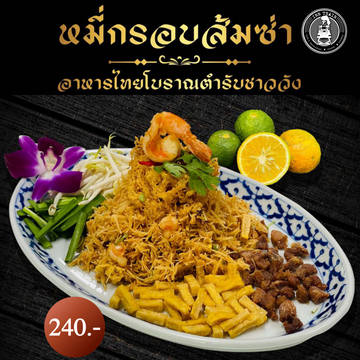
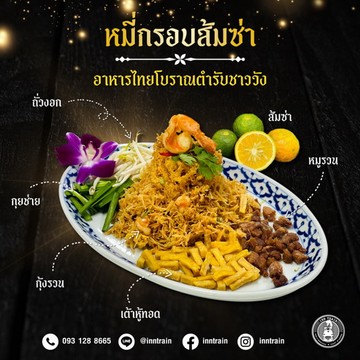
หมี่กรอบส้มซ่า อาหารไทยโบราณตำรับชาววัง
หมี่กรอบส้มซ่า หรือหมี่กรอบโบราณนี้ เป็นอีกหนึ่งเมนูที่หาทานยากในปัจจุบัน หลายคนอาจแย้งว่า “หมี่กรอบก็มีขายกันทั่วไป หากินไม่เห็นยากเลย” เลยต้องชี้แจงแถลงไขกันตรงนี้ว่า หมี่กรอบส้มซ่าของ Inn Train นี้เป็นตำรับชาววังแต่โบราณด้วยส่วนประกอบและวิธีทำนั้นยึดแบบแผนดั้งเดิม โดยเฉพาะ #ส้มซ่า ที่เราดั้นด้นค้นหาลุยเข้าไปถึงสวนเพื่อให้ได้ส้มซ่าแท้ๆมาปรุงเมนูนี้
ว่าแล้วก็ขอกล่าวถึง “ส้มซ่า” กันอีกสักหน่อย ‘ส้มซ่า’ เป็นผลไม้ตระกูลส้มฉ่ำน้ำ รูปลักษณ์คล้ายมะกรูด เปลือกหนา เนื้อคล้ายส้มเช้ง ให้กลิ่นและรสเปรี้ยวหวานอยู่ระหว่างมะนาวกับส้ม จึงเป็นผลไม้ที่ใช้ทั้งน้ำจากเนื้อและผิวปรุงรสอาหารไทยโบราณหลายตำรับ ทั้งยำ น้ำพริก รวมถึงหมี่กรอบโบราณที่ใช้ทั้งน้ำและผิวของส้มซ่ามาปรุงจนเป็นเอกลักษณ์ของหมี่กรอบตำรับเก่าของเรานี้เอง คนเฒ่าคนแก่ทราบกันดีว่าถ้าจะทำหมี่กรอบตำรับเก่าให้อร่อยก็จะขาดส้มซ่าไปไม่ได้เลย เป็นหัวใจของการปรุงรสหมี่กรอบตำรับเก่าขนาดที่ว่าคนโบราณหากคิดทำหมี่กรอบ ต่อให้เครื่องประกอบอื่นๆ ครบถ้วนแต่ขาดเพียงส้มซ่า ก็จะไม่ตั้งเตาทำหมี่กรอบเด็ดขาด นอกจากชูรสและกลิ่นอาหาร ‘ส้มซ่า’ ยังให้สรรพคุณขับลม แก้ท้องอืดท้องเฟ้อ ช่วยให้เจริญอาหารยิ่งขึ้น ปัจจุบัน‘ส้มซ่า’ หายากมากและที่มีขายกันก็ลูกละหลายสิบบาท
ขั้นตอนการทำ “หมี่กรอบส้มซ่า” ตำรับชาววังนี้ ต้องใช้ทั้งเวลาและใส่ใจในรายละเอียดค่อนข้างมาก ตั้งแต่การเคี่ยวปรุงน้ำเชื้อ(หรือน้ำซอส) การหั่นเต้าหู้และกุ้งรวนหมูรวนที่ต้องหั่นเป็นชิ้นเล็กเสมอกันเพื่อเวลาคลุกเคล้าส่วนผสมต่างๆ แล้วทั่วถึง ไปจนถึงขั้นตอนการแช่ตระเตรียมเส้นหมี่ขาวแห้งให้ความชื้นพอเหมาะ คุมไฟทอดหมี่ให้กรอบฟูแต่พอดี ไม่ฟูฟ่องอย่างหมี่กรอบที่เราเห็นกันทั่วๆไปในท้องตลาด แน่นอนว่าเสน่ห์อาหารไทยที่ต้องมีครบรสทั้งรสเปรี้ยว หวาน เค็ม แถมด้วยความสดชื่นและกลิ่นหอมจากน้ำและผิวของส้มซ่า ต้องมีในเมนูจานนี้จึงจะเรียกได้ว่า หมี่กรอบส้มซ่าตำรับโบราณ อย่างแท้จริง
* มีเกร็ดเล็กเกร็ดน้อยมาเล่าให้ฟังอีกว่า หมี่กรอบส้มซ่านี้เป็นอาหารไทยตำรับชาววังอีกหนึ่งเมนู เพราะเป็นอาหารไทยทรงโปรดของล้นเกล้ารัชกาลที่ 5 โดยม.ร.ว.คึกฤทธิ์ ปราโมชได้เคยกล่าวไว้ว่าล้นเกล้ารัชกาลที่ 5 ทรงโปรดเมนูนี้เป็นพิเศษ ถึงขั้นให้หม่อมเจ้าวิทยา เจ้านายในราชสกุลปราโมช ผู้ทรงมีฝีมือในการผัดหมี่กรอบ เข้าวังไปทำเมนูนี้ตั้งเครื่องเสวยอยู่เป็นประจำ จึงเป็นเครื่องการันตีได้เป็นอย่างดีว่าหมี่กรอบส้มซ่าเมนูนี้อร่อยรสเด็ดอย่างแท้จริง
สรุปง่ายๆคือ
- เมนูนี้หาทานไม่ง่ายเลยโดยเฉพาะที่เป็นตำรับชาววังและใช้ส้มซ่าแท้
- เมนูทำไม่ง่ายเลยต้องอาศัยคนที่มีความรู้และประสบการณ์การทำอาหารไทยอย่างช่ำชอง
- เมนูนี้อร่อยจริง ได้ครบรสและ#อูมามิ กลมกล่อม รับรองว่าชิมแล้วต้องติดใจ
แวะมาลองทานได้ที่ Inn Train Cafe & Restaurant วันนี้
Mee Krob Som Sa Crispy Vermicelli with Kaffir Lime
This Mee Krob Som Sa, or ancient crispy vermicelli, is a dish that's truly hard to find these days. Many might argue, "Crispy vermicelli is everywhere; it's easy to find!" But we need to clarify that Inn Train's Mee Krob Som Sa is an authentic, ancient royal recipe. Its ingredients and preparation strictly adhere to traditional methods, especially concerning the Som Sa (Kaffir Lime), which we painstakingly seek out, venturing deep into orchards to secure genuine Som Sa for this dish.
Let's talk a bit more about "Som Sa." It's a succulent citrus fruit resembling a kaffir lime, with a thick rind and flesh similar to a sweet orange. Its aroma and taste, a blend of sour and sweet, fall between a lime and an orange. This unique profile makes it invaluable in many ancient Thai recipes, lending both its juice and zest to dishes like various Yums (salads), Nam Prik (chili pastes), and indeed, our traditional crispy vermicelli. The use of both Som Sa's juice and peel is what gives our old-style crispy vermicelli its distinctive character. Elders well know that a truly delicious old-style crispy vermicelli cannot be made without Som Sa. It is the heart of the seasoning for this traditional dish; ancient cooks would rather not even start preparing crispy vermicelli if they had all other ingredients but lacked Som Sa.
Beyond enhancing flavor and aroma, "Som Sa" also possesses medicinal properties, helping to expel gas, relieve bloating, and stimulate appetite. Today, "Som Sa" is incredibly rare, and those available can cost dozens of baht per fruit.
The preparation process for this royal recipe of "Mee Krob Som Sa" demands considerable time and meticulous attention to detail. Every step is crucial: from slowly simmering the base sauce, to precisely dicing tofu, stir-fried prawns, and stir-fried pork into uniform, tiny pieces for perfect blending of all ingredients. Then there's the critical step of soaking and preparing the dried vermicelli to achieve just the right moisture content, and precisely controlling the heat when frying to achieve a perfectly crisp yet airy texture – not overly puffed like the common crispy vermicelli found in general markets.
Naturally, the charm of authentic Thai cuisine lies in its full spectrum of flavors: sour, sweet, and salty, combined with the refreshing zest and fragrant aroma from Som Sa's juice and peel. These qualities must be present in this dish for it to truly be called an authentic, ancient Mee Krob Som Sa.