
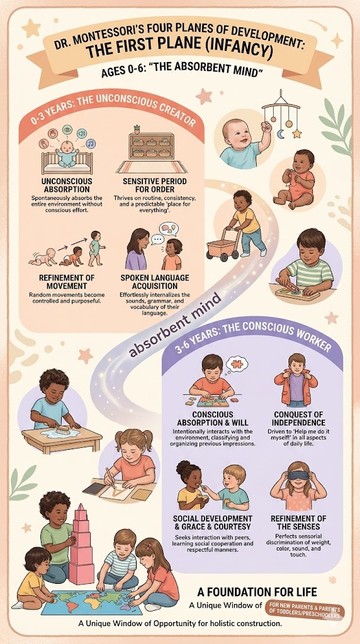
The First Plane: Infancy (Birth to Age 6)
Key Theme: The Absorbent Mind | "Help me to do it by myself."
This is arguably the most critical period of human life. The child's mind acts like a super-powered sponge, unconsciously soaking up entire systems—language, culture, movement, order—directly from their surroundings without effort. Their primary task is to construct the foundational self and gain physical and functional independence.
- 0–3 Years (The Unconscious Absorbent Mind): The child builds themselves solely by absorbing experiences. Movement, language, and basic trust are formed. (Includes Nido and Toddler environments).
- 3–6 Years (The Conscious Absorbent Mind): The child begins to deliberately interact with their environment to refine the abilities already absorbed. They seek to do for themselves, choosing purposeful work and developing concentration. (The Primary / Children’s House environment).
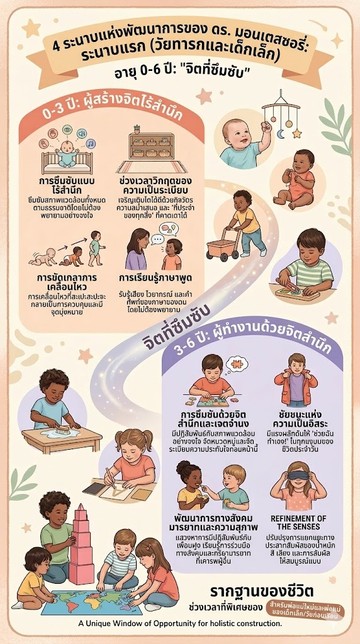
ระนาบที่หนึ่ง วัยทารกและปฐมวัย (แรกเกิดถึงอายุ 6 ปี)
แนวคิดสำคัญ: จิตที่ดูดซับ (The Absorbent Mind) | “ช่วยฉันให้ฉันทำสิ่งนั้นได้ด้วยตัวเอง”
ช่วงวัยนี้ถือได้ว่าเป็นช่วงเวลาที่สำคัญที่สุดช่วงหนึ่งของชีวิตมนุษย์ จิตใจของเด็กทำหน้าที่เสมือนฟองน้ำพลังสูงที่สามารถดูดซับสิ่งต่าง ๆ รอบตัวได้อย่างเป็นธรรมชาติ เด็กจะซึมซับระบบต่าง ๆ ทั้งภาษา วัฒนธรรม การเคลื่อนไหว และความเป็นระเบียบ จากสภาพแวดล้อมโดยตรงโดยแทบไม่ต้องใช้ความพยายาม ภารกิจหลักของเด็กในช่วงนี้คือการสร้างตัวตนพื้นฐานของตนเอง และพัฒนาความเป็นอิสระทั้งทางกายภาพและการใช้ชีวิต
- 0–3 ปี (จิตที่ดูดซับโดยไม่รู้ตัว — The Unconscious Absorbent Mind)
เด็กสร้างตัวตนของตนเองผ่านการซึมซับประสบการณ์จากสิ่งแวดล้อมโดยตรง การเคลื่อนไหว ภาษา และความไว้วางใจพื้นฐานต่อโลกเริ่มก่อตัวขึ้นในช่วงนี้ (รวมถึงสภาพแวดล้อมแบบ Nido และ Toddler) - 3–6 ปี (จิตที่ดูดซับอย่างมีสติ — The Conscious Absorbent Mind)
เด็กเริ่มมีปฏิสัมพันธ์กับสภาพแวดล้อมอย่างตั้งใจ เพื่อพัฒนาทักษะต่าง ๆ ที่ได้ซึมซับมาแล้วให้ดียิ่งขึ้น เด็กต้องการทำสิ่งต่าง ๆ ด้วยตนเอง เลือกทำกิจกรรมที่มีจุดมุ่งหมาย และพัฒนาความสามารถในการจดจ่อ (สภาพแวดล้อมแบบ Primary / Children’s House)
สถาปัตยกรรมแห่งการเติบโต: พัฒนาการสี่ระนาบของดร.มอนเตสซอรี
การศึกษามอนเตสซอรีมิได้ถูกกำหนดขึ้นอย่างสุ่มหรือไร้แบบแผน หากแต่เป็นระบบการศึกษาที่ซับซ้อนซึ่งตั้งอยู่บนความเข้าใจอย่างลึกซึ้งเกี่ยวกับพัฒนาการของมนุษย์ ดร.มาเรีย มอนเตสซอรี ได้ระบุช่วงพัฒนาการที่แตกต่างกันออกเป็นวงจรละหกปี หรือที่เรียกว่า “ระนาบของพัฒนาการ (planes of development)” ซึ่งเป็นเส้นทางที่เด็กทุกคนจะก้าวผ่านไป แต่ละระนาบเปรียบเสมือนการปรับโครงสร้างใหม่ทั้งหมดของจิตใจ บุคลิกภาพ และความสัมพันธ์ของเด็กกับโลก เปรียบได้กับกระบวนการแปรสภาพของหนอนผีเสื้อที่กลายเป็นผีเสื้อ เพื่อให้สามารถชี้นำเด็กได้อย่างมีประสิทธิภาพ การศึกษามอนเตสซอรีจึงออกแบบวิธีการเรียนรู้และสภาพแวดล้อมให้สอดคล้องกับความไวต่อการเรียนรู้และ “พลังพิเศษ” ที่เป็นเอกลักษณ์ของเด็กในแต่ละระนาบของพัฒนาการนั้น ๆ.
The Architecture of Growth: Dr. Montessori's Four Planes of Development
Montessori education isn't arbitrary; it's a sophisticated system built upon a precise understanding of human development. Dr. Maria Montessori identified distinct six-year cycles, or "planes," through which every child progresses. Each plane represents a complete restructuring of the child's mind, personality, and relationship with the world, comparable to metamorphosis in a caterpillar becoming a butterfly.
To effectively guide children, Montessori education aligns its methods and environments with the unique sensitivities and "superpowers" inherent to each specific plane.